Ocean Explorer
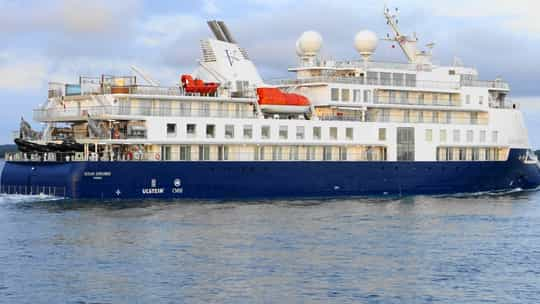
Expedition Cruise Ship | Infinity Ulstein Cx103 (ice-strengthened Expedition Ship) Class



Image courtesy of Quark Expeditions ©
Highlights of Ocean Explorer
- X-BOW hull design - The ULSTEIN CX103 bow pierces swell instead of pitching over it, which means smoother passages on crossings like the Drake.
- 162 travelers, 99 crew - A crew ratio that translates into faster Zodiac rotations and staff who know your name by day two.
- Full Zodiac fleet - Every landing runs in small boat groups, so time ashore is maximized rather than queued.
- Expedition team lectures - Naturalists and polar historians turn sea days into context that deepens every landing.
- Biosecurity mudroom - Purpose-built boot-wash and gear staging keeps landings compliant and your cabin clean.
- 2024 refit - A three-year-old hull with current fittings, not a veteran expedition ship past its prime.
- Open deck viewing - Multiple observation positions let 162 travelers spread out when whales appear, no elbowing for the rail.
Ocean Explorer Specifications
- Year built
- 2021
- Last refit
- 2024
- Cabins
- 80
- Crew
- 99
- Guests
- 162
- Length
- 104 m (341 ft)
- Beam
- 18 m (59 ft)
- Speed
- 16 kn
- Tonnage
- 8,228 GT
Ocean Explorer Itineraries & Sailings
Upcoming sailings on Ocean Explorer, earliest departure first.



Why Book With Waterways Cruise?
Four decades of expertise, one dedicated advisor, and every detail handled, from your front door to the gangway and back.
Cruise Concierge
A dedicated advisor who learns your name, your travel style and your preferences, then stays with you from the first conversation to the day you return home. Not a call center. Never a stranger.
100% Custom‑Built
No cookie-cutter packages. Flights, hotels, transfers and shore days are designed from scratch around how you actually like to travel, then refined until the trip feels like yours.
40+ Years in Travel
Founded by J. Richard, a four-decade veteran of the travel industry, and focused solely on premium river and ocean cruising. Decades of ship and itinerary knowledge go into every recommendation.
Book With Total Confidence
A travel agency that is a proud member of Signature Travel Network, CLIA, ASTA and IATA.





Overview of Ocean Explorer
You feel Ocean Explorer before you see much of it: the hull hums differently in ice-strengthened steel, the gangway smells of cold sea air, and the daily schedule on the wall lists landing sites instead of showtimes. This is a 162-guest expedition ship built in 2021 by CMHI-China Merchants Heavy Industry at the Haimen shipyard in Jiangsu, China, on the INFINITY ULSTEIN CX103 platform - a design known for its X-BOW hull, which slices through polar swell rather than slamming over it. At 8,228 gross tons with 99 crew, the ship carries a staff-to-traveler ratio that most ocean ships five times her size cannot match. She sails under the Bahamas flag and underwent her most recent refit in 2024, keeping the hardware current for the environments Quark Expeditions sails: Antarctica, the Arctic, and the subpolar regions in between. Booking this ship means choosing ice over pool decks, landings over sea-day lounging, and expedition staff over entertainers. If that trade sounds right, read on.Fellow Guests on board Ocean Explorer
Expect travelers who packed for weather, not for dinner. The typical Ocean Explorer passenger is well-traveled, often 45 and up, and more interested in a Zodiac landing among penguins than in anything happening indoors. Couples, solo travelers, and small groups of friends dominate; multi-generational family bookings are rare. The pace follows the expedition leader and the ice, not a printed program - the day may start with a 6 a.m. announcement that conditions allow an unscheduled landing, and travelers on this ship tend to be up and dressed before the second call. The atmosphere is collegial and unhurried between outings: recaps and briefings in the main lecture space, cameras drying on cabin desks, conversation over coffee about what the wildlife did that morning. English is the working language on board, covering announcements, safety drills, briefings, and shore excursions, and the international expedition team communicates in English throughout the voyage.
Cabins & Suites
Cabins on Ocean Explorer are designed as warm, efficient bases for an active trip - a place to sleep well, dry gear, and review photographs, not a room you are meant to live in all day. Across the range, from standard staterooms to the larger suites, the fit reflects the ship's 2021 build and 2024 refit: modern finishes, proper storage for expedition clothing, and bathrooms sized sensibly for a vessel of 8,228 gross tons. Suites add space and, at the top of the range, separate living areas for travelers who want more room on a longer polar voyage. What matters more than square footage is the practical layout: hooks and drying capacity where you need them, beds that handle rougher seas, and windows or balconies that let you watch the ice go by from your own space. With only 162 travelers aboard, there are no bad decks in the usual sense - the ship is small enough that everything is a short walk from everything else.
Entertainment & Activities
Entertainment on Ocean Explorer is the expedition itself. Days are built around Zodiac cruises and shore landings, with the ship's fleet of inflatable boats shuttling small groups to beaches, ice edges, and historic sites, conditions permitting. On sea days and evenings, the program shifts indoors to the lecture and briefing spaces, where the expedition team - typically including naturalists, historians, and polar specialists - delivers talks on the wildlife, geology, and exploration history of the regions being sailed. Nightly recaps preview the next day's plans and review what the day delivered. There is no casino, no theatre production, and no pool-deck entertainment; that is the nature of an 8,228-ton expedition vessel, and it is also the point. The open decks and observation areas function as the ship's most-used venue, with travelers gathering at the rails for whale sightings and icebergs at all hours. Bring binoculars; the ship supplies the reasons to use them.
Dining & Bars
Dining on an expedition ship of this size is a single, well-run operation rather than a roster of venues. Ocean Explorer serves meals in a main dining room with open seating, on a schedule that flexes around landings - breakfast windows widen on early-departure mornings, and lunches are timed so nobody misses a Zodiac call to eat. The galley puts out hearty, well-executed fare suited to cold climates: substantial breakfasts, warming soups, plated dinners with choices at each course. Dietary requirements are handled with notice, as is standard for a 162-guest ship where the kitchen knows its travelers by name within days. A bar and lounge serve as the social hub between outings, the natural venue for post-landing drinks and the evening recap crowd. Room service in the conventional big-ship sense is not the model here; the rhythm of the expedition keeps travelers in the shared spaces, which is where the ship's social life actually happens.
Wellness, Kids & Venues
Wellness aboard Ocean Explorer is scaled to a small expedition vessel: a fitness room for maintaining a routine on sea days, and the kind of sauna-and-heat facilities that make particular sense after a morning in a Zodiac at near-freezing temperatures. The real workout, though, is the itinerary - hiking on shore landings, climbing in and out of boats, walking snow and shingle in expedition gear. There are no kids clubs, and the ship is not designed for family programming; younger travelers are uncommon and the experience assumes adult self-sufficiency. The signature venues are functional ones: the mudroom, where boots and parkas are staged and decontaminated for biosecurity-compliant landings, and the lecture and observation spaces that anchor the onboard program. Deck access matters on this ship, and the ULSTEIN CX103 design provides viewing positions that keep 162 travelers spread out rather than stacked at a single rail.