National Geographic Resolution
Expedition Cruise Ship | Ice-strengthened Expedition Ship Class


Image courtesy of Lindblad Expeditions ©
Highlights of National Geographic Resolution
- X-BOW hull design - The inverted bow cuts through polar swells instead of slamming over them, making Drake Passage crossings noticeably more comfortable.
- Open bridge policy - Travelers can watch officers navigate ice fields and chat with the captain, a standing invitation almost no large ship offers.
- Undersea exploration program - ROV footage and hydrophone audio bring penguin hunts and whale song to the lounge screens in real time.
- Full kayak fleet - Enough kayaks for simultaneous paddling means quiet encounters with wildlife at water level, not a lottery for slots.
- National Geographic photographers - Onboard pros run workshops and critique sessions, so travelers return with dramatically better images.
- Solo cabin options - Dedicated single staterooms let solo travelers book a polar expedition without hunting for a roommate.
- Individual mud room lockers - Heated, organized gear storage keeps expedition parkas and boots dry between landings.
- Zodiacs for every traveler - The landing craft fleet moves all 148 travelers ashore in one rotation, maximizing time on the ice.
National Geographic Resolution Specifications
- Year built
- 2021
- Cabins
- 69
- Crew
- 112
- Guests
- 126-148
- Length
- 124 m (407 ft)
- Beam
- 21 m (69 ft)
- Speed
- 17 kn
- Tonnage
- 12,786 GT
National Geographic Resolution Itineraries & Sailings
Upcoming sailings on National Geographic Resolution, earliest departure first.


12 Days One-Way from Valparaiso-Santiago to Buenos Aires
National Geographic Resolution
25 Days Valparaiso-Santiago, Chile Round Trip
National Geographic Resolution
Why Book With Waterways Cruise?
Four decades of expertise, one dedicated advisor, and every detail handled, from your front door to the gangway and back.
Cruise Concierge
A dedicated advisor who learns your name, your travel style and your preferences, then stays with you from the first conversation to the day you return home. Not a call center. Never a stranger.
100% Custom‑Built
No cookie-cutter packages. Flights, hotels, transfers and shore days are designed from scratch around how you actually like to travel, then refined until the trip feels like yours.
40+ Years in Travel
Founded by J. Richard, a four-decade veteran of the travel industry, and focused solely on premium river and ocean cruising. Decades of ship and itinerary knowledge go into every recommendation.
Book With Total Confidence
A travel agency that is a proud member of Signature Travel Network, CLIA, ASTA and IATA.
18 Days Valparaiso-Santiago, Chile Round Trip
National Geographic Resolution
17 Days Valparaiso-Santiago, Chile Round Trip
National Geographic Resolution
16 Days One-Way from Punta Arenas to Puerto Montt
National Geographic Resolution
18 Days One-Way from Valparaiso-Santiago to Papeete
National Geographic Resolution
15 Days One-Way from Easter Island Chile to Papeete
National Geographic Resolution


11 Days Papeete, French Polynesia Round Trip
National Geographic Resolution
Overview of National Geographic Resolution
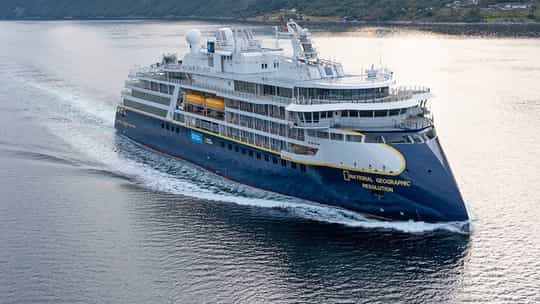
Standing on the outer decks of National Geographic Resolution as the hull shouldered through loose sea ice, the first thing that registers is quiet. This is an ice-strengthened expedition ship built in 2021, and it behaves like one: the X-BOW hull design slices through swells rather than pitching over them, and the ship's 12,786 gross tons are spent on capability, not casinos. The ship carries 148 travelers with a crew of 112, a ratio that shows in the Zodiac loading lines, the dining room, and the speed with which staff learn names. Built by CRIST Shipyard in Gdynia, Poland, and finished at Ulstein Verft in Ulsteinvik, Norway, and flagged in the Bahamas, Resolution was purpose-designed for polar water. The practical result is a ship that gets 148 people off the vessel and onto ice, tundra, or a kayak in a single rotation, then gets everyone warm and fed within the hour. If the goal is Antarctica, the Arctic, or remote coastline reached by very few ships, this is the tool built for exactly that job.Fellow Guests on board National Geographic Resolution
Expect fellow travelers who brought binoculars and actually use them. The passenger mix on Lindblad Expeditions skews toward well-traveled, curious adults: photographers, birders, retirees checking off a seventh continent, and a meaningful number of families with teenagers on school-holiday departures. The atmosphere is informal and early-to-rise. Mornings start with expedition staff briefings, days revolve around weather windows and wildlife sightings, and evenings end with a recap of the day plus a preview of tomorrow rather than a stage show. Dress is practical; nobody packs a jacket and tie. English is the working language of the ship, used for announcements, briefings, and shore landings, and the expedition team communicates in English on excursions. Because Lindblad draws an international audience, you will hear other languages in the lounge, but you do not need anything beyond English to participate fully in every landing, hike, and Zodiac cruise. The pace is active by design; most outings involve walking on uneven ground, and staff grade each option so travelers can choose their level.
Cabins & Suites
Cabins are comfortable, modern, and designed around the reality of expedition travel. Most staterooms include large windows or balconies, because on a polar itinerary the view from the bed at 3 a.m. in midsummer daylight is part of the product. Interiors favor clean Scandinavian-influenced design with good storage, heated bathroom floors, and enough hooks and drying space for layers. Suites add separate living areas and larger balconies for travelers who want room to spread out camera gear. Solo cabins are available, a rarity worth noting for single travelers on a ship of this size. What you will not find is excess: cabins are sized for sleeping and regrouping between outings, not for spending the day indoors. With only 148 travelers aboard, no cabin is far from the mud room, the lounge, or the outer decks, which matters when the expedition leader's voice comes over the speaker announcing orcas off the bow and you have ninety seconds to get outside.
Entertainment & Activities
Entertainment here is the expedition itself. There is no theatre, no casino, and no production cast; the daily program is built around landings, Zodiac cruises, kayaking, and hikes led by a naturalist team that includes historians, geologists, marine biologists, and National Geographic photographers. On sea days, the schedule fills with lectures in the lounge, photography workshops, and time on the bridge, which operates an open-door policy. The ship carries a full fleet of Zodiacs and kayaks, so outings run simultaneously rather than in waves. A remote-operated vehicle and hydrophones let the undersea specialist bring the water column and the seafloor onto the lounge screens, which sounds like a gimmick until a leopard seal cruises past the camera. Evenings center on the daily recap, where staff show what was spotted and explain what comes next. For travelers who measure a good day by species logged and steps taken rather than by shows attended, this program delivers more structured activity than any conventional cruise.
Dining & Bars
Meals are social, flexible, and built around expedition timing. The main restaurant serves breakfast, lunch, and dinner with open seating, so tables form around whoever you stood next to in a Zodiac that morning. Menus lean toward well-executed international dishes with regional touches tied to the itinerary, and portion sizes assume you have been walking on ice all day. Breakfast and lunch typically run as a combination of buffet and table service to keep turnaround fast when a landing window opens. The lounge bar is the social hub, pouring drinks through recap hour and into the evening, with naturalists usually holding court at one end of the room. Coffee, tea, and snacks are available around the clock, which matters on a ship where a whale sighting at 11 p.m. can empty every cabin. Room service is available for travelers who want a quiet morning or an early night. The kitchen handles dietary requirements well, though notifying the line in advance is the sensible move on remote itineraries where resupply is not an option.
Wellness, Kids & Venues
Wellness on Resolution is scaled to an expedition ship: real, but compact. A fitness center carries cardio and weight equipment, a spa offers massage treatments that book up fast after heavy landing days, and a sauna delivers the particular pleasure of steaming while icebergs drift past the window. There is no jogging track or sprawling thermal suite; the workout that counts is the two-mile tundra hike. For younger travelers, Lindblad runs its National Geographic Global Explorers program on select family departures, with staff-led activities like plankton tow studies, zodiac driving lessons, and field journaling rather than a conventional drop-off kids club. Key public venues include the observation lounge with wraparound windows, the main restaurant, the lecture space, the mud room where gear is stowed and boots are cleaned, and the open bridge. The mud room deserves special mention: individual lockers keep expedition parkas and boots organized and dry, which anyone who has managed wet gear in a cabin will recognize as serious design thinking.