


Image courtesy of Lindblad Expeditions ©
Highlights of National Geographic Islander 2
- 48 travelers, 91 crew - The highest service ratio in expedition cruising means naturalists actually know your name and your interests.
- Twice-daily Galápagos landings - A small-ship Ecuadorian flag and tiny manifest unlock landing sites closed to larger vessels.
- Photo instructor on board - Lindblad's National Geographic partnership puts a certified photography expert within arm's reach all voyage.
- Global Explorers kids program - Field notebooks and naturalist-led activities make this a rare expedition genuinely built for families.
- Snorkel and kayak included - Sea lions, turtles, and penguins become your daily itinerary, not an upsold excursion.
- 2022 full refit - A 1991 Flender-Werft hull with thoroughly modernized interiors and refreshed cabins.
- Naturalists at your dinner table - Expedition staff dine with travelers, so the day's questions keep getting answered over dessert.
National Geographic Islander 2 Specifications
- Year built
- 1991
- Last refit
- 2022
- Cabins
- 26
- Crew
- 91
- Guests
- 48
- Length
- 85 m (279 ft)
- Beam
- 17 m (56 ft)
- Speed
- 16 kn
- Tonnage
- 3,370 GT
National Geographic Islander 2 Itineraries & Sailings
Upcoming sailings on National Geographic Islander 2, earliest departure first.

Why Book With Waterways Cruise?
Four decades of expertise, one dedicated advisor, and every detail handled, from your front door to the gangway and back.
Cruise Concierge
A dedicated advisor who learns your name, your travel style and your preferences, then stays with you from the first conversation to the day you return home. Not a call center. Never a stranger.
100% Custom‑Built
No cookie-cutter packages. Flights, hotels, transfers and shore days are designed from scratch around how you actually like to travel, then refined until the trip feels like yours.
40+ Years in Travel
Founded by J. Richard, a four-decade veteran of the travel industry, and focused solely on premium river and ocean cruising. Decades of ship and itinerary knowledge go into every recommendation.
Book With Total Confidence
A travel agency that is a proud member of Signature Travel Network, CLIA, ASTA and IATA.


8 Days San Cristobal Island, Ecuador Round Trip
National Geographic Islander 2
Overview of National Geographic Islander 2
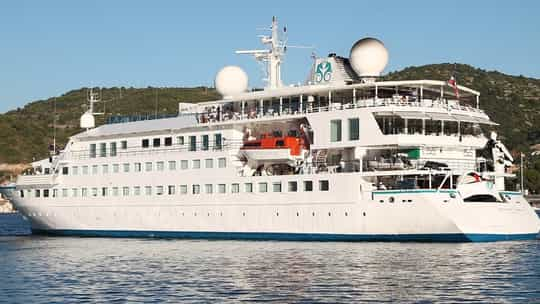
Mornings on National Geographic Islander 2 start with a briefing over coffee, not a poolside DJ - within the hour you are in a Zodiac, watching a blue-footed booby nest three meters away. That is the point of this ship. Built in 1991 by Flender-Werft AG (Lubeck, Germany) and refit in 2022, she is a 3,370-gross-ton mega yacht sailing under the Ecuadorian flag, carrying just 48 travelers with a crew of 91. That crew-to-traveler ratio of nearly two staff per guest is almost unheard of at sea, and on a Lindblad Expeditions vessel it funds naturalists, photographers, and expedition leaders rather than butlers and bartenders. The 2022 refit brought the interiors up to modern expedition-yacht standards while keeping the footprint small enough to anchor in Galápagos landing sites that larger ships simply cannot access. If your idea of a cruise is sea days and slot machines, look elsewhere. If it is snorkeling with sea lions before lunch and a geology lecture after, this is one of the most capable platforms in the archipelago.Fellow Guests on board National Geographic Islander 2
Expect a ship full of people who packed binoculars, not cocktail dresses. The 48 travelers aboard National Geographic Islander 2 skew toward well-traveled couples and solo adventurers in their 40s to 70s, plus a meaningful number of multi-generational families - grandparents who have been to Antarctica bringing teenage grandchildren to their first wild place. National Geographic affiliation draws photographers, birders, scientists, and retired teachers; conversation at dinner runs to species lists and camera settings more than ports of call. The pace is active and early: excursions launch after breakfast, afternoons often hold a second landing or a snorkel session, and evenings wind down after the daily recap and next-day briefing. Dress is functional throughout - quick-dry layers and deck shoes, never formal. English is the working language aboard, for briefings and daily life; Ecuadorian crew and naturalists are typically bilingual, and shore interpretation in the Galápagos is delivered in English with Spanish available. There is no casino hum, no queue, no announcement blare. With 91 crew for 48 travelers, staff learn your name and your coffee order by day two.
Cabins & Suites
Cabins on National Geographic Islander 2 were comprehensively refreshed in the 2022 refit, and they follow expedition-yacht logic: comfortable, quiet, well-lit places to sleep and recharge between outings, not destinations in themselves. With only 48 travelers aboard, every cabin is close to the waterline action and a short walk from the lounge, dining room, and Zodiac boarding area - there is no bad location on a ship this size. Expect comfortable beds, en-suite bathrooms, ample storage for camera gear and layers, and windows rather than portholes in keeping with the yacht layout. Higher-category suites add more space for travelers who want it. What you will not find are vast balcony categories or butler-serviced penthouse decks; that is not what this ship is for. Housekeeping standards benefit directly from the 91-crew manifest - cabins are turned around quickly and kept immaculate even as travelers track in sand and saltwater twice a day.
Entertainment & Activities
The entertainment program is the expedition itself. Days revolve around guided shore landings, Zodiac cruises along volcanic coastline, kayaking in calm bays, and snorkeling - on a Galápagos sailing, frequently twice a day. Lindblad's model puts certified naturalists in every landing group, and the Lindblad-National Geographic partnership adds a certified photo instructor aboard to help travelers get better wildlife images regardless of skill level. Evenings center on the lounge, where the expedition team delivers illustrated talks on island geology, Darwin's finches, and conservation work, followed by the next day's briefing. An underwater video program lets non-snorkelers see what happens below the surface. There is no theatre, no production show, no casino - the ship is quiet by 10 p.m. because the first panga departs early. For the right traveler, that is not a limitation; it is the entire value proposition.
Dining & Bars
Dining aboard National Geographic Islander 2 is a single-sitting, open-seating affair in one dining room, which on a 48-traveler ship means everyone eats well and nobody waits. Menus lean on Ecuadorian ingredients and flavors alongside international staples, with fresh seafood and produce sourced in region where itineraries allow. The atmosphere is casual - no formal nights, no jackets - and naturalists and expedition staff routinely dine with travelers, which turns meals into extensions of the day's learning. The lounge bar serves as the social hub for a pre-dinner drink during the evening recap. Portions are sensible rather than theatrical, built for people who swam that morning. Travelers with dietary requirements are accommodated with advance notice, as is standard for a ship with this crew ratio; the galley knows exactly who is aboard. Room service exists in the modest, practical form you would expect on a yacht of this size - this is a ship where you eat with the group, then sleep well.
Wellness, Kids & Venues
Wellness here is measured in snorkel sessions, guided hikes over lava fields, and kayak miles rather than spa appointments. The ship carries exercise equipment for stretching and basic workouts, but there is no full spa complex or salon - a mega yacht of 3,370 gross tons does not pretend to be a resort, and travelers booking Lindblad generally do not want one. What the ship does offer families is the National Geographic Global Explorers program, Lindblad's kids and teen offering built around the expedition: young travelers get field notebooks, hands-on activities with naturalists, Zodiac driving lessons, and their own wildlife checklists. It is one of the few children's programs at sea that is genuinely educational rather than a holding pen, and the Galápagos is arguably the finest classroom on earth for it. Public spaces are compact and purposeful: the lounge for talks and recaps, the dining room, open deck space for wildlife watching as frigatebirds ride the ship's slipstream, and a small library corner with reference material on the islands.